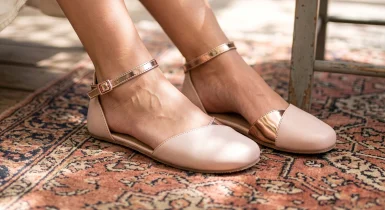
Why Does Foot Size Change After Switching to Barefoot?
Switching to barefoot shoes can cause your foot to "grow", and shoes that used to fit are suddenly tight. This is, however, a natural process. The foot gradually returns to its evolutionary shape, the toes spread out, the big toe straightens, and the muscles grow stronger. This development can slightly change its size and width.
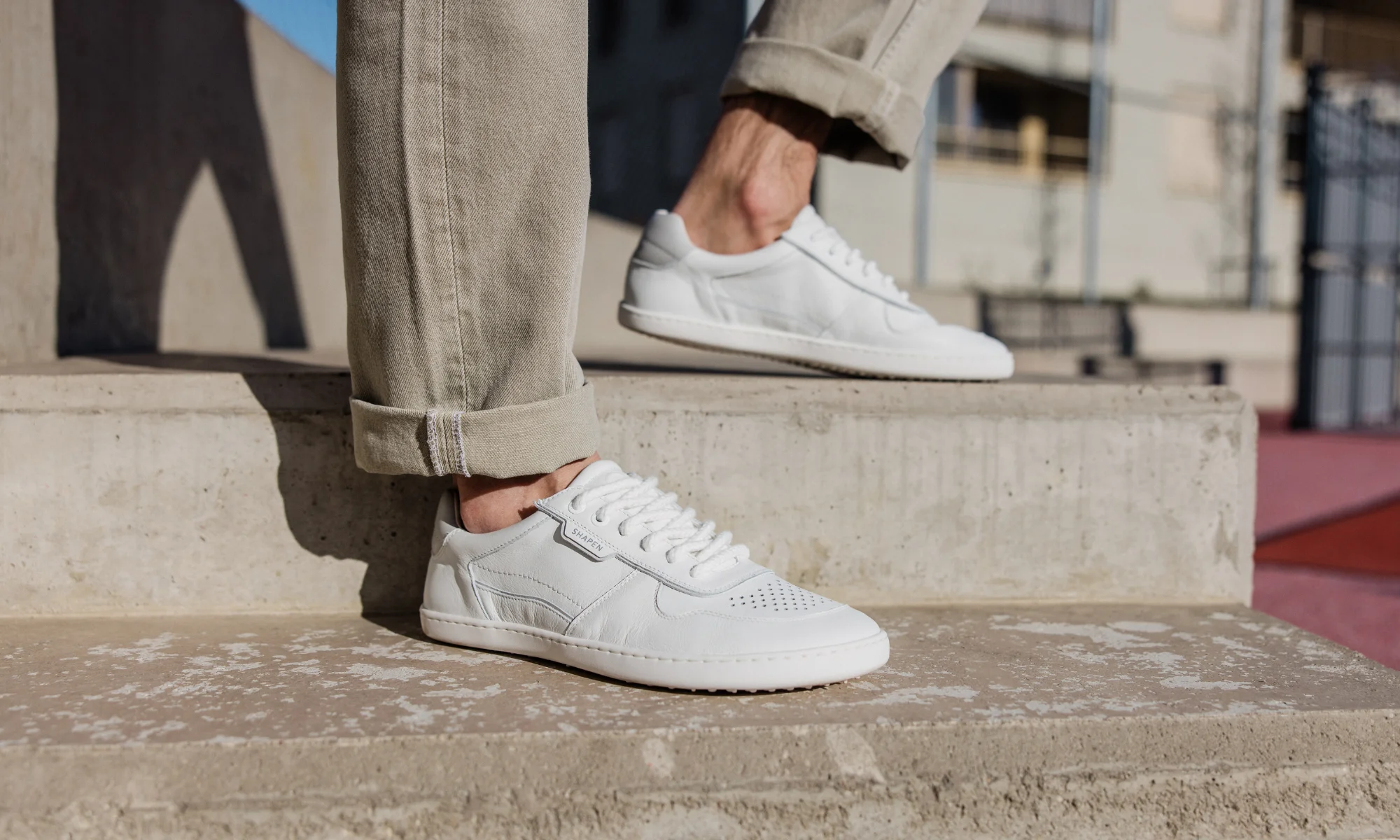
Switching to barefoot footwear is becoming increasingly popular, especially among people looking for a healthier and more natural way of walking. However, after a few weeks or months of wearing barefoot shoes, many are surprised to find that their foot seems to have "grown". Shoes that used to fit are suddenly tight or uncomfortable, and new barefoot models need to be a size or two larger. Why does this happen?
1. Return to the foot's natural anatomy
Conventional shoes with a narrow toe box, a stiff sole, and rigid support hold the foot in an unnatural shape. The toes are squeezed together, the arch is passively supported, and the muscles weaken. After switching to minimalist barefoot footwear, the foot can finally move the way it was designed to by evolution. This leads to a gradual "unfolding" of the toes and a natural widening of the forefoot.
How does this show up?
- the big toe starts to straighten and point forward
- the toes gain space and spread out
- the foot widens by a few millimetres to centimetres
- the foot takes on a "foot-shaped" form - the natural shape of a foot, not the shape of a shoe


 Vegan
Vegan 






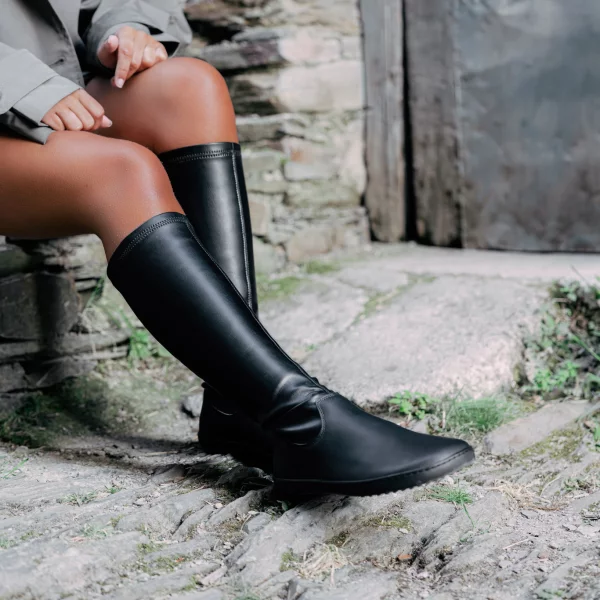
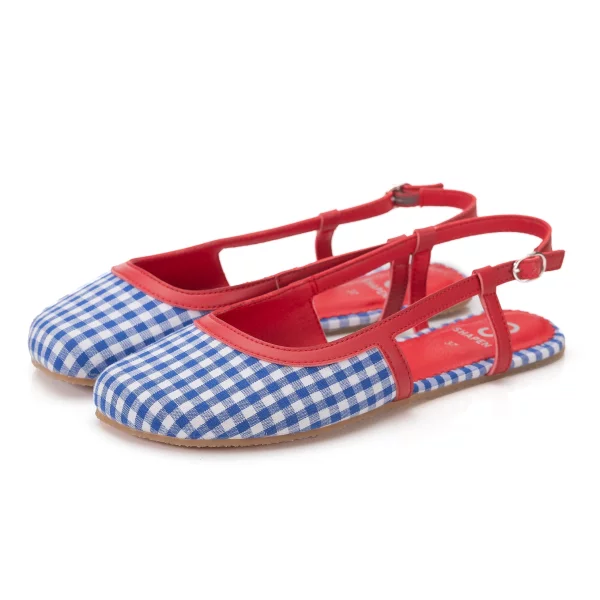

2. Strengthening of muscles and ligaments
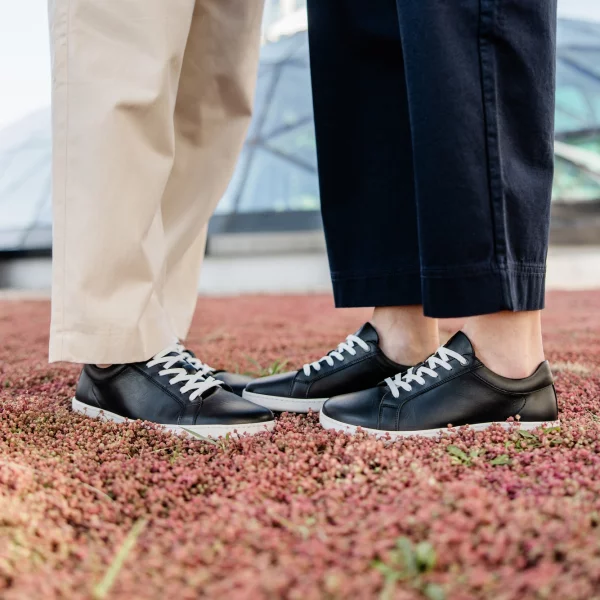
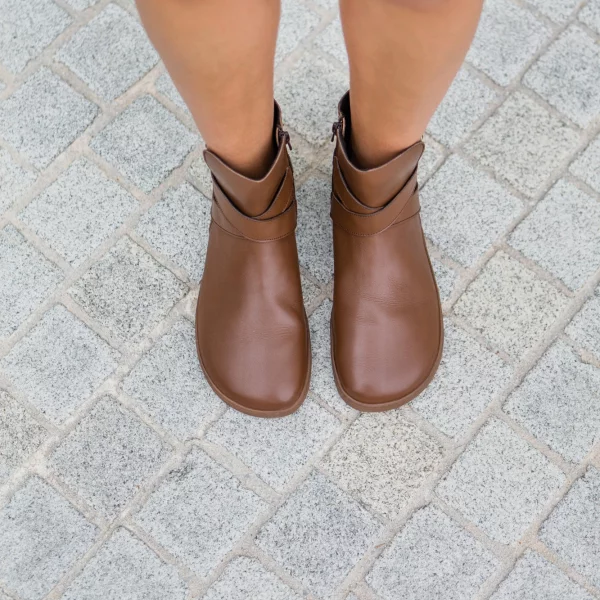
Barefoot shoes have no arch support, which allows the muscles in the feet to work. Regular activation strengthens the plantar fascia, the small muscles, and the ligaments. Stronger muscles mean the foot becomes firmer and, at the same time, more voluminous - similar to how the muscles in your hands grow larger with exercise. This can also change the length of the foot, especially due to the straightening of the big toe and a more active push-off from the ground.
3. Improved function of the big toe (hallux)
A key factor is a straight big toe. Traditional shoes push the big toe inward, which shortens the foot and limits its stabilising function. Barefoot footwear allows the big toe to return to its natural axis.
When the big toe straightens:
- the foot visually lengthens
- balance and stability improve
- the risk of developing hallux valgus decreases
4. Change in posture and walking pattern
Wearing barefoot shoes leads to a more natural landing on the ground through the midfoot or forefoot. This activates parts of the foot that don't work in conventional shoes. The foot works more dynamically: it spreads under load and "returns" on push-off.
This cycle gradually increases its natural flexibility and width. The arch also changes: in some people it rises, in others it stabilises. Both changes can affect the shoe size a person needs.
5. Removal of deformities caused by traditional footwear
Many people have had their feet deformed for years by narrow toe boxes, heels, and stiff soles. Common issues include:
- a deviated big toe
- shortened calf muscles
- a weakened longitudinal and transverse arch of the foot
- compressed and overlapping toes
How much can foot size change?
The change is individual, but the following is commonly observed:
- width + 0.5 to 1.5 cm
- length + 0.2 to 0.8 cm
A change in foot size after switching to barefoot is not a flaw, but a signal that the foot is starting to work correctly. Barefoot footwear, natural movement, and active muscle work allow the foot to develop into its natural shape - wider, stronger, and more functional.