How to measure your foot correctly?
Finding the perfect size is the absolute foundation of healthy barefoot walking. Discover our simple, step-by-step guide to accurately measuring both foot length and width at home, avoiding common measurement pitfalls, and choosing the ideal pair of SHAPEN barefoot shoes for all-day comfort.
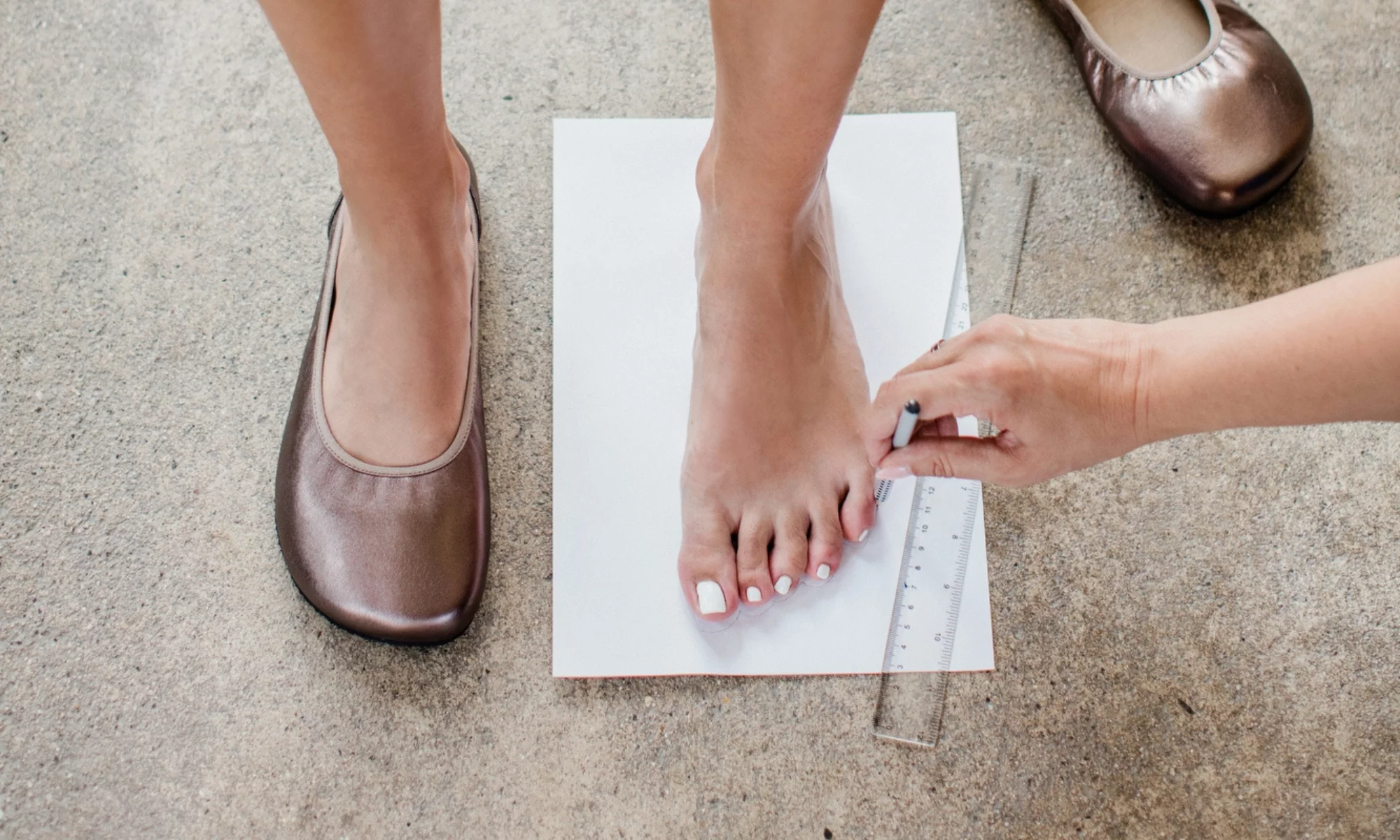
Measuring your foot correctly is the foundation of choosing the right footwear, especially when it comes to barefoot shoes. The wrong size is one of the most common reasons shoes press, don't fit properly, or quickly become uncomfortable. If you're wondering how to choose the right shoe size, why your shoes are pinching, or how to find out your foot size, you're in the right place.
Why is measuring your foot correctly so important?
Every brand uses a different last, a different construction and a different sizing system. This means that, for example, an EU 38 from one brand doesn't necessarily match an EU 38 from another. Measuring your foot correctly for barefoot shoes is especially important because barefoot footwear works with the natural shape of the foot and needs more precise measurements than regular shoes.
Which foot measurements do you need to know?
When choosing barefoot footwear, you mainly need two basic measurements: the length and the width of your foot. Foot length is the distance from the heel to the longest toe. Foot width is the widest part of the front of the foot - around the toes. These two measurements form the basis for correctly measuring your foot and, subsequently, choosing the right size.
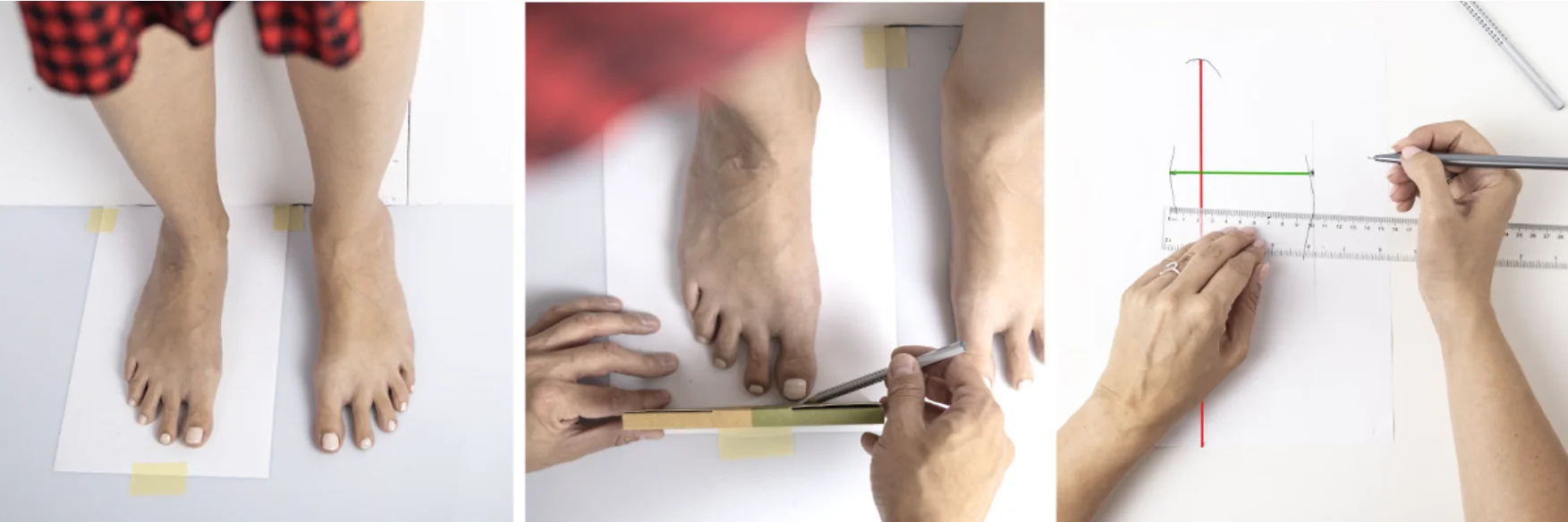
Method 1: Tracing your foot
For this method, you'll need paper, a pencil and a ruler.
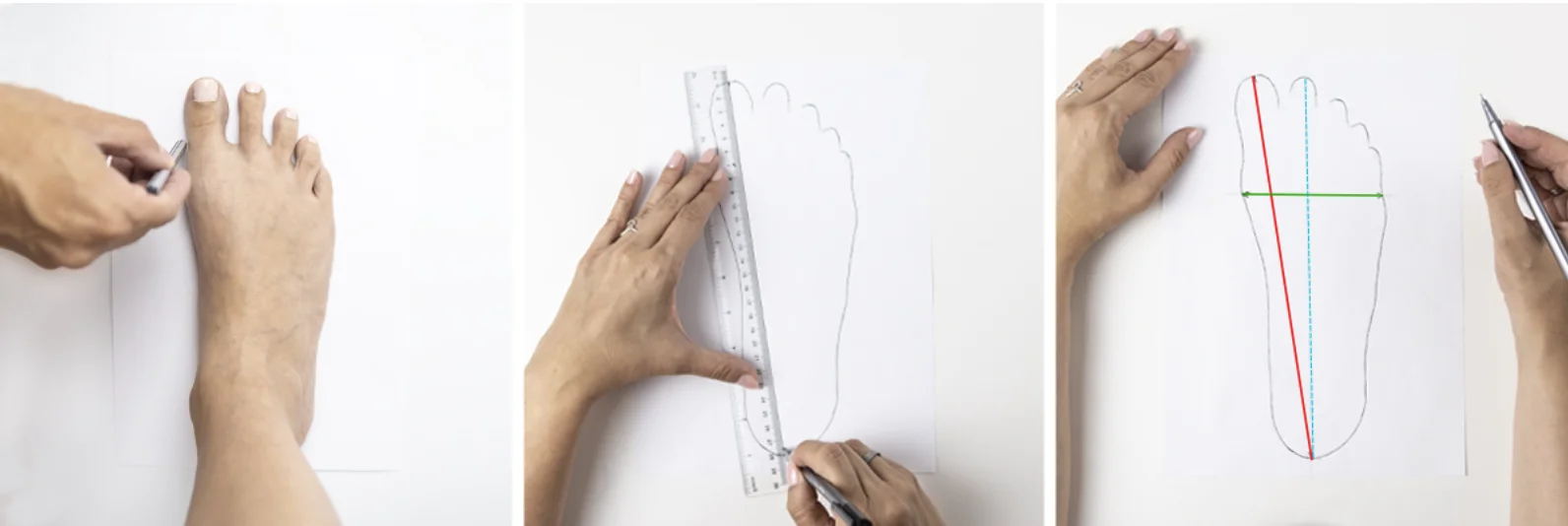
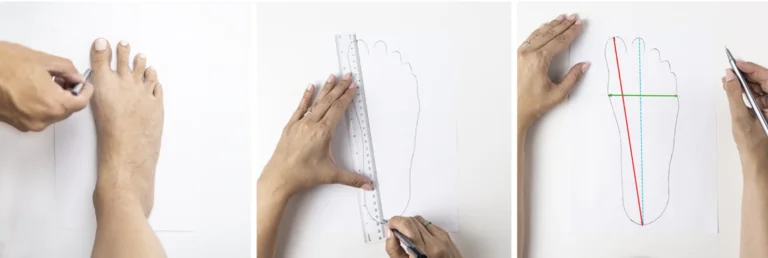
- Place the paper against a wall and stand on it so that your heel touches the wall.
- Trace the outline of your foot.
- Measure the length of your foot - connect a point in the middle of the back of the heel with a point at the tip of the longest toe. Add the recommended allowance to the measured length.
- Measure the width of your foot at its widest point.
- Repeat the same process for the other foot. When choosing your size, go by the larger foot.
The allowance is a small amount of extra space in front of the toes. It helps ensure natural movement of the foot, comfort while walking, and enough room for the toes. In barefoot footwear, the allowance is essential for both comfort and healthy movement. The recommended allowance is 0.3-0.5 cm. You can read more about the allowance and its importance in the article HERE.
Method 2: Measuring against a wall
For this method, you'll need a wall, paper, a book (or a sturdy notebook), a pencil and a ruler.
- Place the paper against a wall and stand on it so that your heel touches the wall.
- Place the book perpendicular to the floor against your longest toe and mark its position with a pencil.
- Use the ruler to measure the distance from the wall to the marked line - this gives you the length of your foot.
- Measure the width at the widest point of your foot.
- Repeat the same measurement on the other foot, and when choosing your size, go by the larger of the two.
The most common mistakes when measuring your feet
These mistakes tend to come up again and again when measuring foot size:
- measuring only one foot (feet can be different sizes),
- measuring while sitting down (the foot isn't bearing weight and changes shape),
- bent knees or incorrect posture,
- an inaccurate foot tracing,
- forgetting to measure the width.
That's why we always recommend measuring both feet while standing. You can read more about the most common mistakes when buying barefoot shoes in the article HERE.
How to choose the right SHAPEN size based on your measurements?
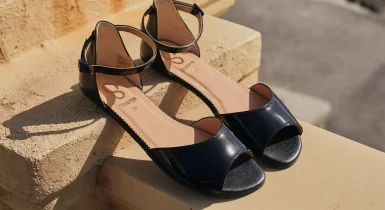
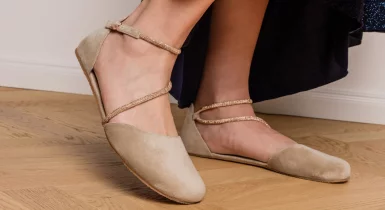
Once you've measured your foot, we recommend comparing your measurements with the size chart found on every SHAPEN barefoot shoe model page. When choosing, take into account mainly the length of your foot, its width, and the type of model (sandals, ballet flats, sneakers). If you're not sure, our team will be happy to help you find the perfect size.